Define the decision
Atlas fixes the scope, geography, useful result, and the questions the research must answer.
Atlas turns hard questions into sourced reports. Each study adds evidence, contradictions, and current answers to one connected knowledge base.
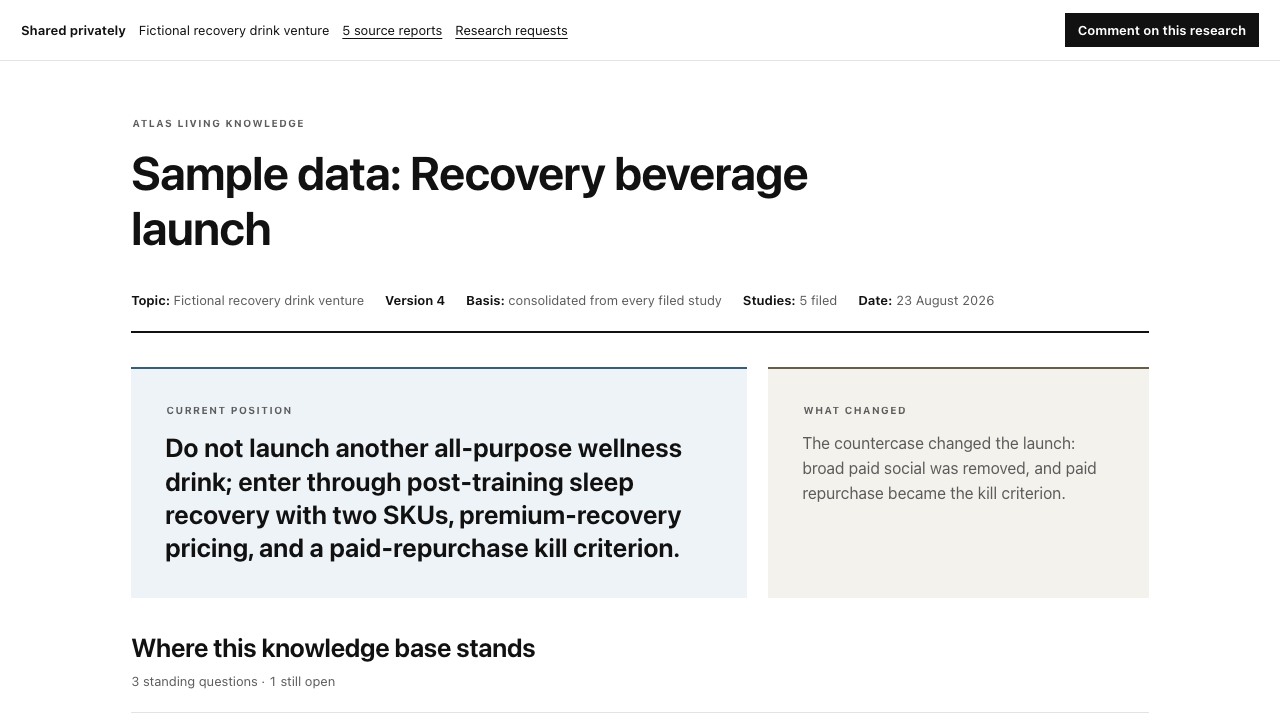
Claims link to exact passages. New evidence can support, contradict, or replace them. The knowledge base keeps the current position.
The pre-plan defines the evidence needed, selects the right tools and source classes, and sets the checks for a complete answer.
Atlas fixes the scope, geography, useful result, and the questions the research must answer.
Relevant studies, source passages, and authorized vault knowledge become context for the new plan.
Each evidence question gets the search routes, databases, documents, and connectors it requires.
Atlas retrieves sources and records the exact passages behind every material claim.
Weak or unanswered parts return to research while another search can improve the answer.
Claims are challenged, cited, and added to the knowledge base after the final checks pass.
Search locates material. Only retrieved source passages can become evidence.
Atlas studies, authorized vault notes, current syntheses, and exact evidence claims.
Live web discovery, public pages, reports, documents, and PDFs.
SEC EDGAR, FRED, World Bank, Wikidata, and public company records.
OpenAlex, Europe PMC, published studies, and their cited source material.
App stores, GitHub, Hacker News, public discussions, and Wikimedia pageviews.
Brave, Exa, DataForSEO, and Perplexity help Atlas find the right primary material.
If the plan requires a source Atlas cannot reach, Atlas records the access gap. A new connector can be built and tested before its output enters the evidence ledger.
A product, campaign, feature, client, or business gets one knowledge base. Every study adds to the same evidence.
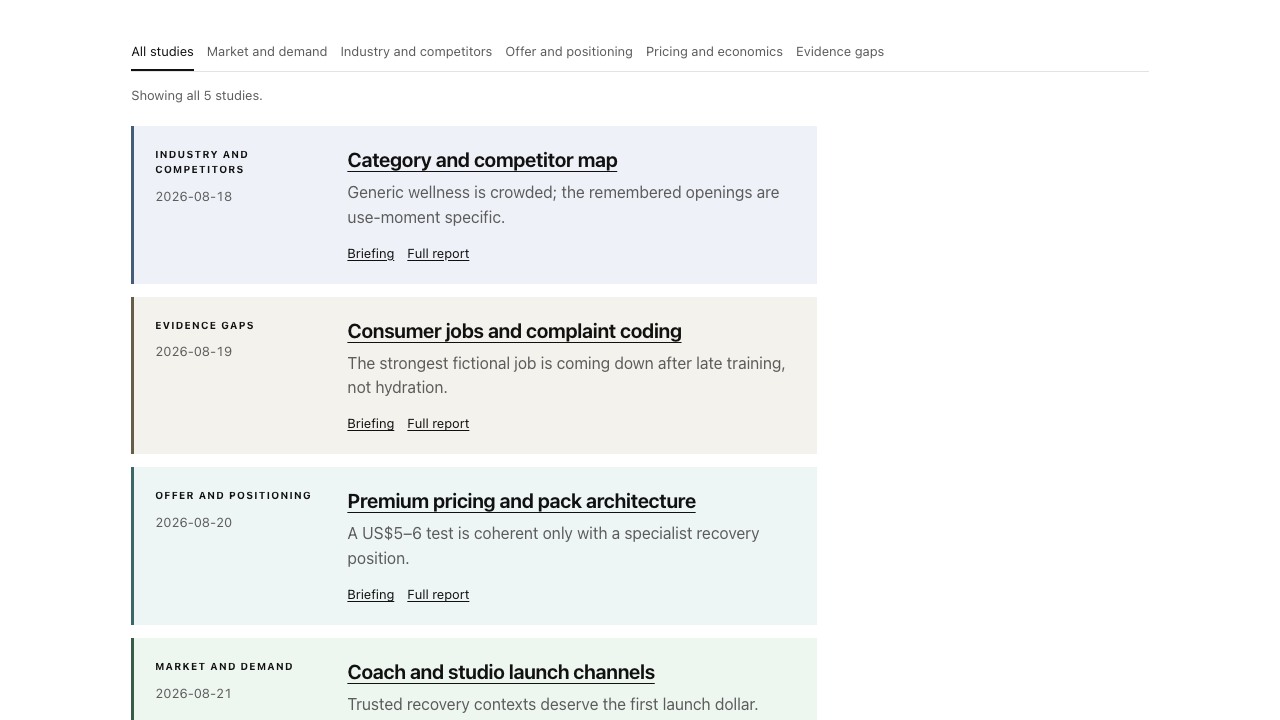
Market structure, competitors, segments, regulation, public data, and the changes shaping the category.
Consumer data, needs, behavior, buying triggers, current alternatives, and price signals.
Ideas, offers, features, services, delivery risks, and evidence of what people will pay for.
Messages, channels, campaign concepts, and evidence of what buyers notice and act on.
Start with one question. Each later study begins with what Atlas has already found.
Request access